LISTEN
  • THE RADIO
    • Our Shows
    • Journal
    • Schedule
    • About Us
    • FAQs
  • THE HUB
    • Local Events
    • Getting Started in France
    • Community Organisations
  • GET INVOLVED
    • Donate / Sponsor
    • Advertise with Us
    • Volunteer
LISTEN LIVE
  • THE RADIO
    • Our Shows
    • Journal
    • Schedule
    • About Us
    • FAQs
  • THE HUB
    • Local Events
    • Getting Started in France
    • Community Organisations
  • GET INVOLVED
    • Donate / Sponsor
    • Advertise with Us
    • Volunteer

alex

The Sanctity of the French Family Unit

8 September 2025 by Alex Brook Lynn
General
family, france, history, lawmaking

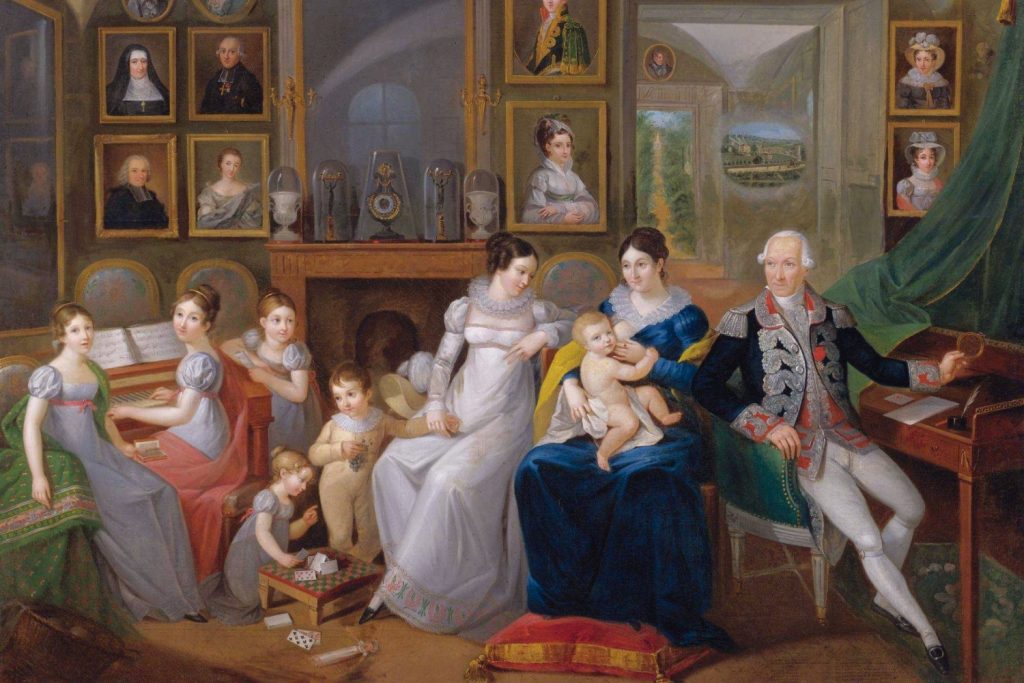
There is a particular reverence that the people of France hold for the concept of family and, by extension, the sanctity of the French family unit. As prevalent as the reverence to family has been in both a cultural and practical sense, the same can be seen in the unique laws and regulations of the French legal system.

With the advent of the French Revolution and the instatement of the new French Republic, the nation would, for the very first time, be unified under a singular, nationalised, universal system of law with the enactment of the French Civil and Penal Codes. The Civil Code itself was an incredible legal pioneer, being the first-ever recorded instance of a codified order of civil law, a legal framework with a history dating back to the foundations of the Roman Empire. In fact, in its current state, civil law has grown to become the dominant legal system in the world, used across all of continental Europe, South America, and most of East Asia.

The Civil and Penal Codes have remained principally intact in the following centuries, but with the ever-shifting cultural norms of French society, many aspects have been amended substantially to match the contemporary values. Still, there have been several certain constants of law that have withstood the passage of time.

Inspired by the principles of Aristotelian morality and tenets of Catholicism, in the late 1200s, the young Italian priest Thomas Aquinas would first conceive of the legal theory of natural law. This theory supposes the ideas of divine truths and irrefutable principles of justice, all founded on a morality that is essential to the core of humans and that transcends and supersedes all customs of the day. As expected, when speaking of universal conceptions of morality, there are also the universal and intrinsic moral evils. These are assault on persons, theft of property, murder, and other acts of maiming. All indefensible acts, and unequivocally unchristian and inhuman. Given the existing Christian inclination of Europe and the fact that many of these evils were already prosecuted to various extents, this legal theory would soon spread across the continent and would shortly become the guiding legal philosophy.

Even as France’s relationship with Christianity changed, natural law underwent an evolution in its own interpretation. With the age of enlightenment that began in the early 1700s, many intellectuals, such as the French philosopher Voltaire, who spearheaded the Enlightenment movement and the principles of secularism, began re-examining the idea of natural law. Voltaire and other Enlightenment philosophers like John Locke spoke of a new society that disjoined the Church and State, whereby religious institutions would no longer have any direct control over a nation. Surprisingly, it was the Christian theory of natural law that was championed as the foundational legal philosophy of this new secularist society. Secularists were still of the opinion that just legal determinations could only be founded through the natural law presumption of transcendent universal truths. However, the Enlightenment interpretation would differ slightly from its religious origins. Whilst universal truths and intrinsic moral wrongs were once derived from religious teachings, they would instead be determined by scientific reasoning and an examination of human psychology.

By the time the Civil and Penal Codes were conceived in Napoleonic France, the intrinsic moral evils of assault, theft, murder, and maiming were already solidified in the culture. However, somewhere along the way, the sanctity of the French family unit entered the divine level of the other such fundamental moral considerations—as essential as Thou Shalt Not Kill—as was the idea of the sanctity of family. As such, there exist several peculiar laws that were first enacted centuries prior that exist to this very day, all linked by their exceptional efforts to preserve and empower the French family unit.

PRINCIPLE OF THE HEREDITARY RESERVE

While some of the stricter familial rules originally noted in the Civil Code, such as the supremacy of the husband over wife and child, have since gone, most of the broader protections for French families have lived on. One of the most notable pieces of surviving law is the principle of hereditary reserve—the legal compulsion upon all French parents, who upon their death must give a certain fraction of their wealth to their children and the surviving partner. The basic breakdown of this reserve is that, in cases of married couples with no children, the surviving spouse must be entitled to one quarter of the estate, with three quarters as an “available quota”, essentially the leftover amount the deceased may allocate as they please. In the case of one child, the hereditary reserve increases to one half; with two children, it rises to two thirds; and for any number of kids beyond that, the reserve will account for three quarters of the deceased’s estate.

This legal principle is a totally unique piece of law that doesn’t exist in any other country. As with any nation-state that bestows on its people the right to private property, they have also collectively agreed that the state has no capacity nor duty to involve itself in the division of wealth after a passing. In these cases, there are deemed to be no ethical justifications for the state to dictate to its citizenry how they are to divide their estate and justify it as such with the concepts of individual financial freedom and free will. And so, a parent is totally free to share their assets by any metric they think of; they are free to engage in a game of family politics, show preference to one child, and disregard another; they could give their entire estate to charity or a secret lover. 

With all the risk this poses—familial abuse, mistreatment, and manipulation—French lawmakers were motivated to come to another solution. Therefore, the law of succession would be founded on the inarguable and paramount duty a parent holds to the protection and care of the family. While in theory, this duty exists across most cultures to varying degrees, the burden of this responsibility weighs far heavier in France. There have been numerous supposed reasons as to why France would be so different, but all of them are muddy as to their true influence on this law. The most commonly agreed upon reason is rather simple: that the law was made as a reflection of the culture of the day, an ideological adherence to the paramount duty. Thus, the governing French Consulate of this new Republic would argue that although the ideas of free will and financial freedom are pertinent concerns, the family estate ought to be treated as a uniquely exceptional case.

Otherwise, despite the declarations made by the French Consulate, it has been supposed that the reason for this change was in fact for pragmatic economic reasons. In the leadup to the Napoleonic takeover of France, legislators had just passed ‘The Law of 17 Nivôse’ in 1794, which abolished their old system of succession law, which stated that only the eldest-born, legitimate son could inherit the estate of the father. In its stead, the estate could be divided among all the sons (at this moment daughters were not yet eligible for property claims) and allow for wealth to be spread outwards, rather than concentrated solely in the hands of the eldest son. Without the right to property, the younger children were greatly disadvantaged, and the only means of personal success the younger sons previously could attain would be in the military or the Church. As a result, the spreading out and diversification of wealth would bear a greater national economy.

Taking a step back to examine the historical roots of the ideology of a ‘paramount duty’, this idea first took shape in the Middle Ages, as historian Philippe Ariès explained in ‘The Child and Family Life under the Ancien Régime. The concepts of families were far simpler and more rigidly defined, whereby the transmission of property and assets from generation to generation was one of the few duties a family member held. One’s estate was one of those essential issues that should not be squabbled over. Over time, this truth never wavered in the minds of the French people, no matter the external pressures. In fact, it was the context of their environment, be it the oppression and instability of the feudal monarchist Ancien Régime or the blood-soaked chaos of the Revolution, that reassured the people of the importance of one’s homestead and the preservation of security, fairness, and the family. The parental duty of care has also manifested in other laws, as demonstrated by the ‘Maintenance Obligation’. As with many other nations, French parents have an obligation to financially support their children, although this obligation applies even to a parent’s adult children, so long as they are not receiving an income, among other conditions.

The law of hereditary reserve appears reasonably favoured in modern French society. It is not some old relic that has managed to slip through the cracks of legal reform; on the contrary, recent efforts have been made to strengthen the effect of this principle. In the explosion of globalisation post-World War II and the incredible ease of movement provided by the creation of the European Union, questions were soon raised about what could be done for French families with estates that extend across multiple nations. The incompatibility of French succession law with the rest of the world has created the pretext for new familial disputes, the very issues for which French law was so keenly created to prevent. As a result, in 2021, a new amendment was made to the Civil Code so that in cases where a party has been disadvantaged by a loss of share to assets located outside of France, as a counterbalance, the disadvantaged party is entitled to an additional ‘compensatory levy’ placed upon the assets located inside France. Given the minimal case law surrounding this amendment, its efficacy is mostly untested, though many legal experts have seen it as a step in the right direction and a clear endorsement of hereditary reserve.

THE DECRIMINALISATION OF FAMILIAL THEFT

Modern legislators have done more than just reinforce existing statutes and instead have enacted wholly new laws under the banner of protecting the family unit. As an addition to the newly reformed Penal Code in 1994, a law was created that—in practically all circumstances—decriminalised the theft of property of one family member at the hands of another. For every other country, familial theft is treated as theft all the same—they wouldn’t consider blood relation as a reasonable exception to theft, or even a mitigating factor for that matter.

For Napoleonic France, a society far more prone to retributive justice and brutal punishment, the law would have been seen as unreasonably lenient, almost slavishly beholden to the idealisation of a cohesive family. In the original incarnation of the Napoleonic French Penal Code, theft of any kind would incur heavy labour at best or, at worst, death, so long as exacerbating conditions, such as the theft occurring at night, and the complementary crime of breaking and entering, were present; factors that under modern sentencing rules would only add time to one’s sentence.

In actuality, the decriminalisation of familial theft is actually more of a philosophical double-back, a return to a social mindset that preceded even the Napoleonic Era. Looking back on the later end of the Ancien Régime, familial theft existed mostly in a grey area of legality. Although by the letter of the law, it was a criminal offence, its prosecution was more akin to jaywalking than it was to common assault. The offence was hardly recognised as a crime, and so it was reluctantly enforced. As historian Julie Doyon notes, of all recorded French prison registers from the years 1694 to 1775, there were forty thousand individuals accused of theft, but only twelve would be prosecuted for familial theft. To sentence someone for an offence committed within the family was very much an uncomfortable taboo and threatened a dangerous precedent that French society would not abide by. It would take a great cultural and class revolution to shake the people from this imposition. On that point, many historians have argued that the state’s shift towards the prosecution of familial theft was intrinsically linked to a recognition of a forming ideological divide that had grown within the French household. As post-monarchist France did not live up to the lofty preconceptions of the autonomous utopia that many held, the family was soon fractured by arguments of monarchist or Napoleonic allegiance. Otherwise, the explanation could be far simpler: that the violence and anger of revolution breed a culture that would treat theft with an equally harsh resolve.

THE RIGHT TO POSTHUMOUS MARRIAGE

Looking forward to the more recent past, the year of 1959 was yet another major moment in the development of this unusual enclave of French law. As clearly evidenced, French familial law is intrinsically linked—if not outright conceived—by a response of external forces that impress upon the structural stability of the family: famine, feudalism, revolution, and economic turmoil. In spite of these forces, the family would paradoxically become more resolved, and in response, the relevant laws would be expanded upon. The situation with posthumous marriage would be the very same.

It all began outside the humble town of Malpasset in the south of France, with a series of foreboding signs that befell the local town’s dam. In the weeks prior, the local area had experienced torrential rain, and the dam rose to troubling levels. At one point, a stream of water was observed eclipsing the lip of the dam, and cracks were soon seen at the supporting concrete slab at the base of the dam. As worrying as these warnings would come to be in hindsight, at the time, the severity of the situation was mostly ignored.

On the 2nd of December 1959, the dam had exceeded the maximum level, and by noon the presiding guardian, André Ferro, requested that the dam be partially drained so as to prevent any further structural, or worse still, total collapse. This request was denied, and it would take until 6pm that night before Ferro was granted permission to let out the excess water. Once 6pm eventually rolled around, it was far too late; the volume of water had become so large that the rain was replenishing the reservoir faster than it could be emptied. Over the next three hours, the dam filled further and further beyond its maximum threshold, and the supporting concrete could no longer withstand the pressure. The reservoir burst out through the concrete wall, decimating all of the right side of the wall and most of the left. A massive 50-metre wave rushed down the Reyran Valley and down to the nearby towns of Malpasset and Fréjus. The disaster would come to be the worst civil disaster in modern French history and result in the loss of 423 lives.

Among the casualties was André Capra, a man who was soon to marry Irène Jodart, who had survived the incident. The loss of her fiancé was unbearable to Ms Jodart, who, through the support of an impassioned and enraged media—fuelled by the apparent mismanagement of the dam operators and regulators—pleaded to then-President Charles de Gaulle for the state to allow the marriage to proceed and for said marriage to be formally recognised. In response, the National Assembly would soon propose and pass Article 171 of the Civil Code, which grants the President of France, under exceptional circumstances, the authority to legally recognise a posthumous marriage. André and Irène would become the first marriage under this new law, and several other notable cases would follow, such as the marriage of Ms Étienne Cardiles and Police Officer Xavier Jugelé, the latter of whom passed away as a result of the 2017 Champs-Élysées terrorist attack.

Whilst Article 171 specifically states that posthumous marriage should not entitle the surviving partner to any financial benefits, i.e., succession claims, the symbolic value of this law cannot be understated. The law has no real practical effect, and yet, of all the peculiar laws mentioned thus far, it is quite possibly the most ideologically aligned with the sanctity of the family—a legal and practical demonstration of the idea that the commitment to family is one that transcends even death itself.  

Yellow Vests Echoes: France Readies for September 10 Nationwide Protest

6 September 2025 by Polly Watton
General, Podcast Episodes
france, paris, politics, protest, strike

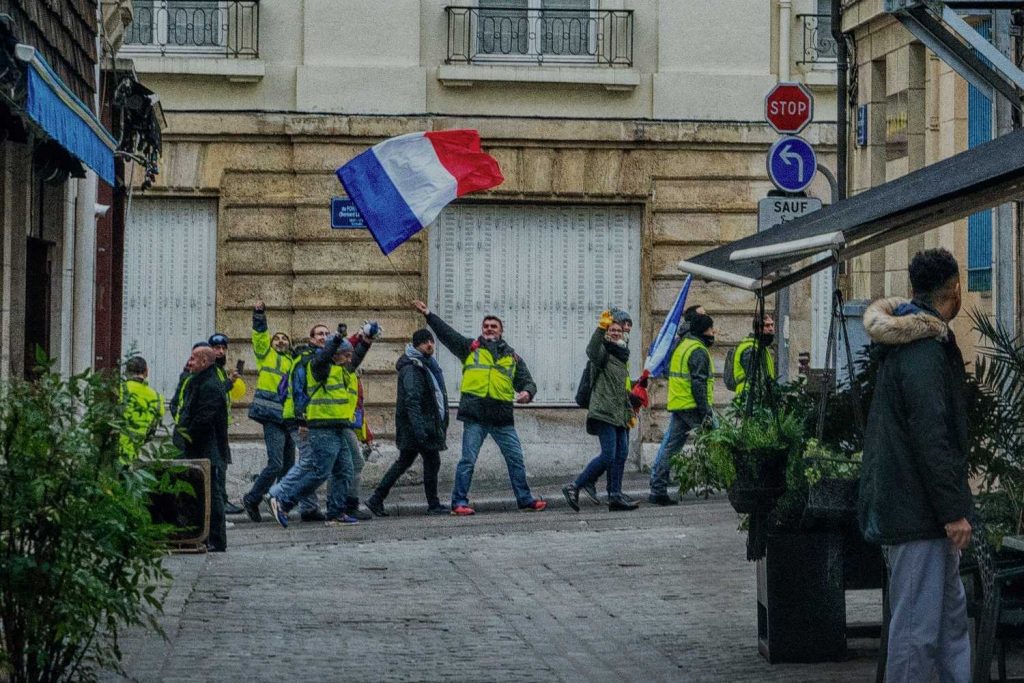
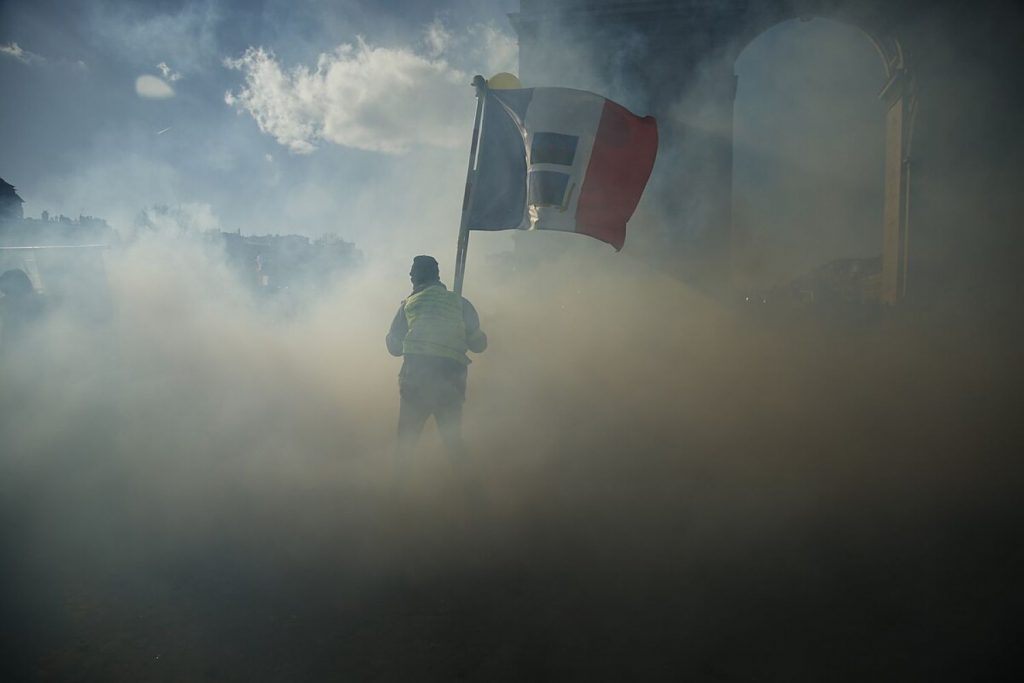
On September 10, France faces the prospect of a nationwide shutdown. A grassroots movement, circulating on social media for months, is calling for a “Block Everything” protest, drawing comparisons to the Gilets Jaunes uprising in 2018. What has brought this anger to a head, and why now?

A Grassroots Movement Takes Shape

September 10 is shaping up as a test of citizen power in France. Under the banner Bloquons tout, activists are calling for a nationwide shutdown. Public transport, roads and city centers could be blocked. Unlike unions or political parties, this movement has no central leadership. Coordination happens through social media platforms like Telegram, TikTok, and Facebook.

Adding to the tension, the government has scheduled a confidence vote on September 8. In France, Parliament can use a confidence vote to decide whether the Prime Minister and the cabinet still have support. A loss would force the government to resign, underscoring just how politically charged this week will be.

Budget Cuts Spark Fire

At the heart of the unrest is Bayrou’s 2026 budget, which proposes €44 billion in cuts. Key measures include eliminating two public holidays (likely Easter Monday and May 8), freezing welfare benefits and income tax brackets and cutting spending across government departments.

The government frames these measures as necessary to manage France’s finances. France’s national debt is around 113% of GDP, meaning the country owes more than it produces in a year. For comparison, Germany’s debt sits at roughly 62%, while Italy’s is higher at 137%. High debt means more of the government’s money goes to paying interest, leaving less for public services.

Prime Minister Bayrou’s message is simple: “Better to tighten the belt now, rather than wait until Brussels forces harsher measures on us.”

For citizens, however, these cuts feel unfair and humiliating. François Boulo, a prominent figure in the Yellow Vests, told Le Média:

“The straw that broke the camel’s back is the removal of those two holidays. Symbolically, it’s extremely powerful and it’s unleashed anger. The logic of the ‘Bloquons Tout’ movement the same as the Gilets Jaunes: it’s independent, apartisan and trying to unite frustration without letting politicians hijack it.”

Beyond Holidays: Environmental and Health Concerns

Earlier this summer, the Loi Duplomb, an agricultural law backed by France’s largest farmers’ union, reopened the use of previously banned pesticides, weakened environmental oversight, and limited the independence of health and safety regulators. Over two million citizens signed a petition against it, the largest in French parliamentary history.

Adding fuel to the fire, revelations about microplastic contamination in bottled water have highlighted the influence of corporate interests over public health. Austerity, deregulation, and environmental scandals together paint a picture of citizens squeezed while powerful lobbies thrive.

Strikes Across the Country

The unrest is set to continue after September 10. On September 18, several major sectors will strike:

  • Pharmacies: Many will close over cuts to generic drug discounts, with closures continuing every Saturday starting September 27
  • Airports: Air traffic controllers and some Air France staff will strike from the morning of September 18 until the night of September 19, potentially delaying or canceling flights
  • Public transport in Paris: Metro, RER, and buses will be disrupted by union strikes
  • SNCF trains: Regional and long-distance routes may face delays or cancellations

There is more to September 10 than the holidays removal or the budget cuts. It all comes down to trust. Do citizens still feel protected and heard by their government? A comfortable win for Bayrou in the confidence vote – though unlikely – could give the government cover to implement austerity. A narrow victory or defeat could ignite new waves of unrest.

This week, France is testing the limits of citizen power, and the echoes of the Yellow Vests are unmistakable. Whether September 10 fizzles into isolated protests or sparks something larger, it promises to be a pivotal moment in French politics.

Listen to the full episode of World Radio Paris Presents to hear more about September 10

Best Parks in Paris for Kids to Play This Summer

18 August 2025 by Polly Watton
General, Local Shows
parentalité, parenting in paris, paris, parks

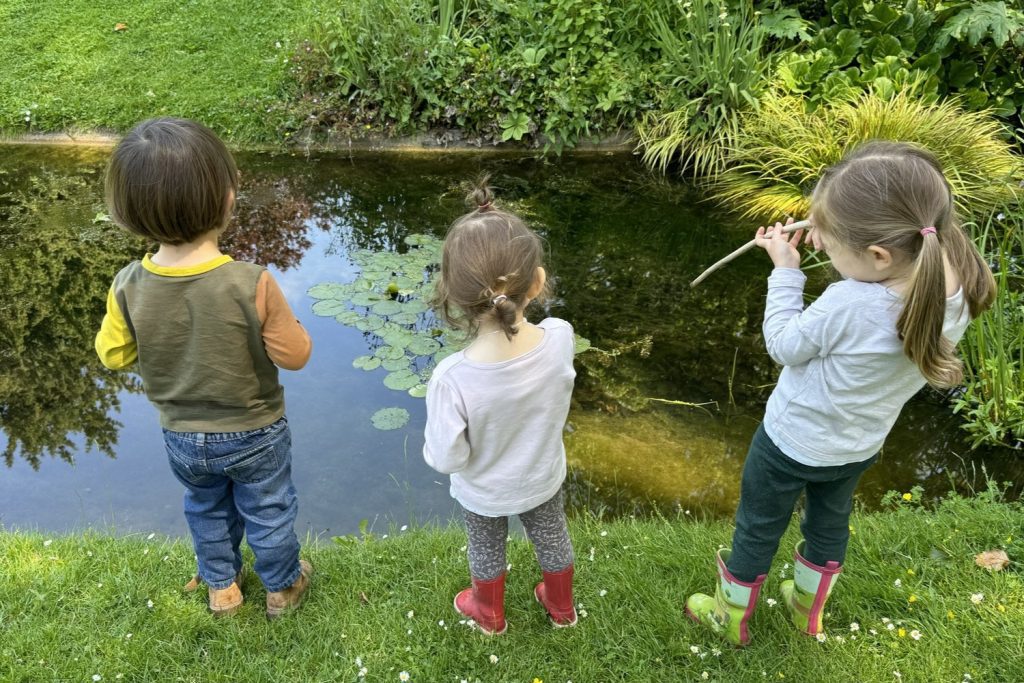
For parents in Paris, summer can be magical… and exhausting. When the kids are bursting with energy and you just need a breather, finding the perfect park can make all the difference. That’s why, on our recent Parentalité episode The Best Playgrounds, Picnics, and Parks in Paris we swapped tips, shared local secrets, and rounded up our favourite green spaces in the city. This guide brings together the best recommendations from that episode, covering everything from quiet, shady spots perfect for toddlers to large parks with lakes and picnic areas.


Large Parks for Day-Long Fun

These parks are built for full days of fun. Wide-open lawns and playgrounds where kids can climb, run, and explore mean toddlers can move safely while older kids have space to roam. With cafés, toilets, and picnic areas on hand, parents can grab a coffee, spread a blanket, and watch the fun unfold. Great for all ages.


Jardin du Luxembourg, the Timeless Favourite

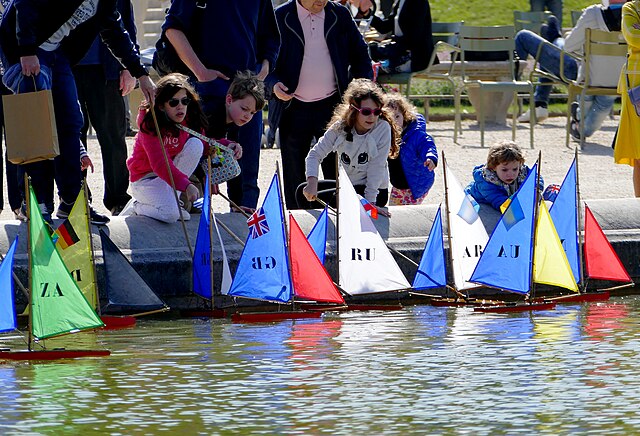
Set in the heart of the very chic 6th arrondissement, this historic garden is elegant and steeped in Parisian charm with classical statues and fountains. It’s perfect for kids thanks to its large and secure playground, puppet theatres, pony rides, and the iconic model boat pond, offering activities that keep children of all ages enchanted.


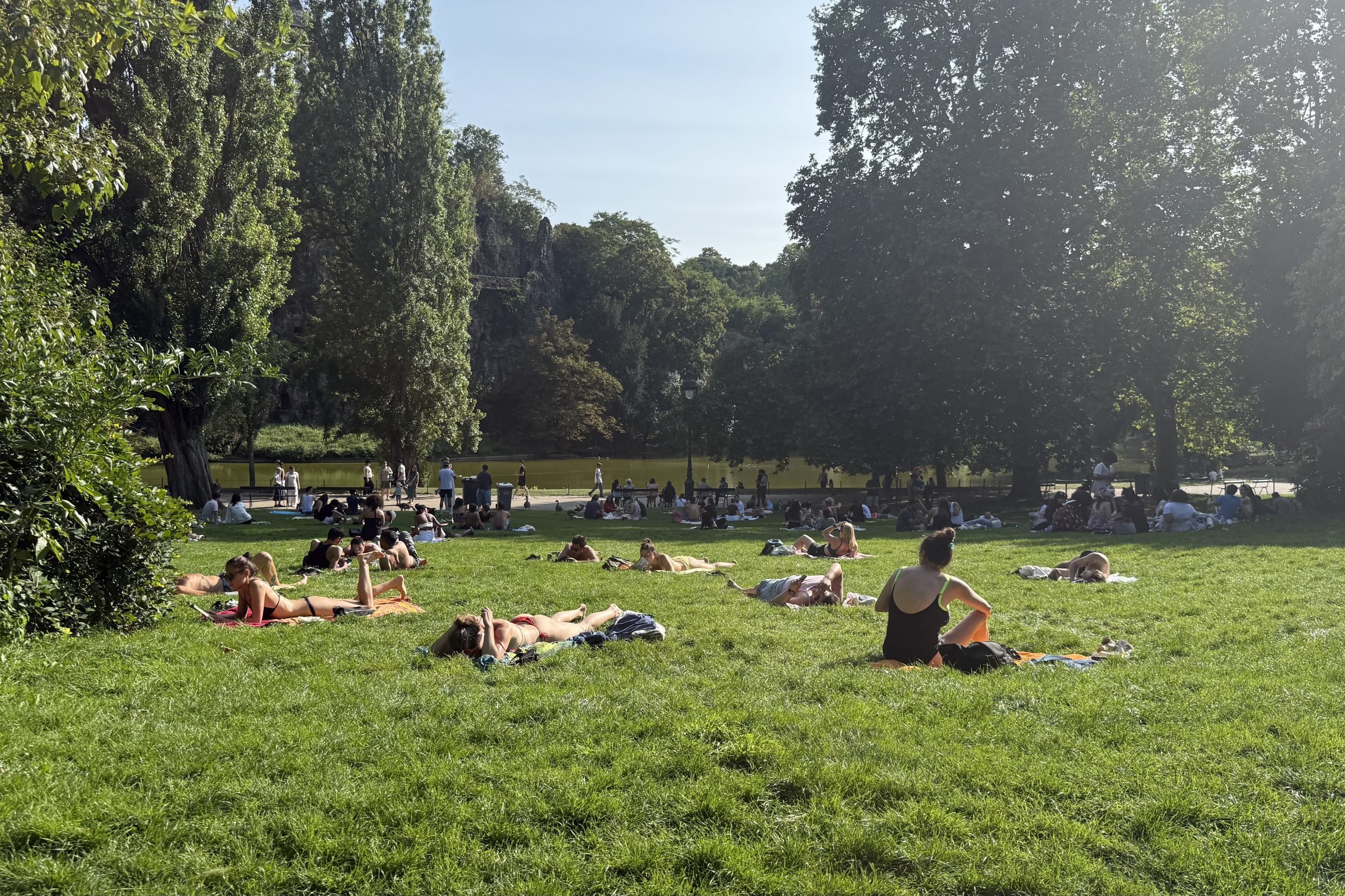
Parc des Buttes-Chaumont

Located in northeast Paris, the Buttes Chaumont’s dramatic cliffs, waterfalls, and hidden grottos feel like stepping into an outdoor adventure storybook. Its large playgrounds, diverse greenery and open grassy areas encourage exploration and active play, sparking imaginations.


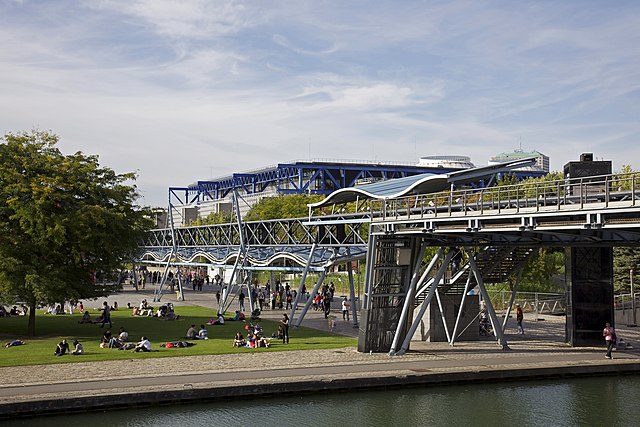
Parc de la Villette

Energetic and creative, this is Paris’s modern playground haven filled with art, science, and fun. Multiple themed playgrounds, the famous Dragon Slide, interactive gardens, and proximity to Cité des Sciences make it a thrilling day out for all ages.


Parc Montsouris 

Located in the 14th arrondissement, Parc Montsouris is one of the largest parks in Paris. Its sloping lawns, lake and multiple playgrounds make it an ideal place for a picnic, a lazy stroll, or a full afternoon of play. 


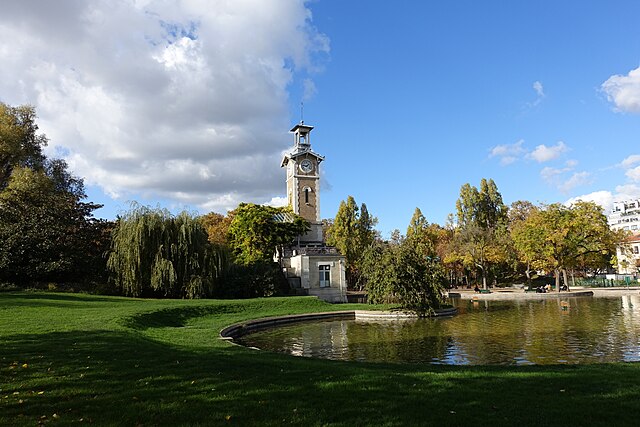
Parc Georges Brassens

This cozy park in the 15th arrondissement offers everything your little family needs: shaded playgrounds, a carousel, and even a weekend book market. It’s also home to urban beekeeping lessons, giving kids a sweet taste of nature inside the city.


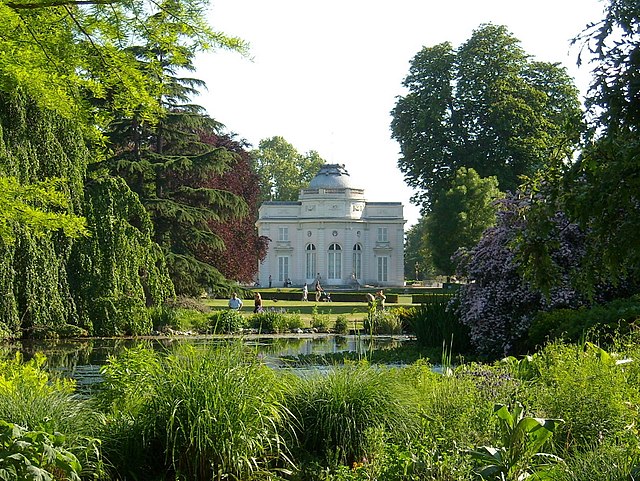
Parc Bagatelle

At the heart of the Bois de Boulogne in western Paris, the Parc Bagatelle is all about charm: manicured rose gardens, wide lawns for picnics, and elegant resident peacocks.


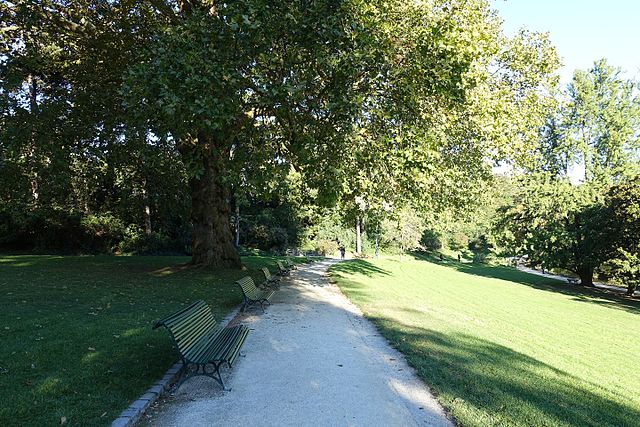
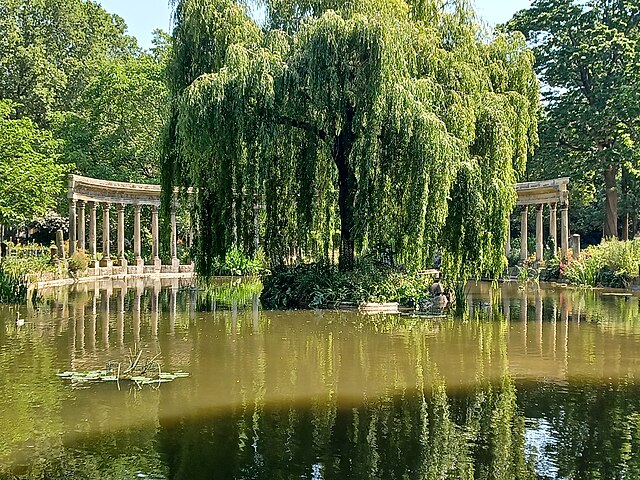
Parc Monceau

Found near the elegant 8th arrondissement, Parc Monceau feels like a refined oasis with beautiful statues and winding paths. Its shaded playgrounds are safe and welcoming for younger children, and the family atmosphere lets parents relax while little ones explore.


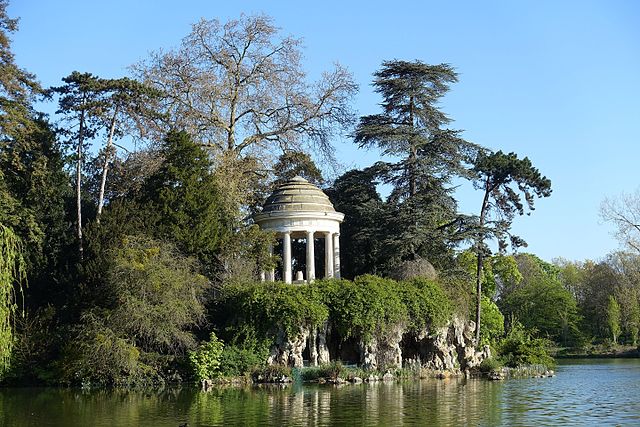
Bois de Vincennes

On the eastern edge of the city, the Bois de Vincennes is practically a mini countryside. Inside of it is the Parc Floral where you’ll find playgrounds, pony rides, a puppet theater, and even some peacocks wandering around.

The Parc zoologique is another wonderful place to see a wide variety of animals, from giraffes, lions and rhinos to penguins, manatees, otters and more. If you head over to Lac Daumesnil or Lac des Minimes, you can also rent pedal boats or rowboats and spend a great time out on the water.


Jardin des Plantes

The Jardin des Plantes in the 5th arrondissement is a perfect family escape in Paris. Alongside its beautiful botanical gardens, you’ll find the historic Ménagerie Zoo, the Gallery of Paleontology with towering dinosaur skeletons, and the Natural History Museum full of impressive fossils and gems. A mix of nature, animals, and science!


Smaller Secret Gardens

Sometimes you just need a pocket of green to let the kids burn off some energy. These smaller parks are perfect to let toddlers and younger kids play safely while parents keep an eye on them. Ideal for toddlers and younger children (2–8 years)


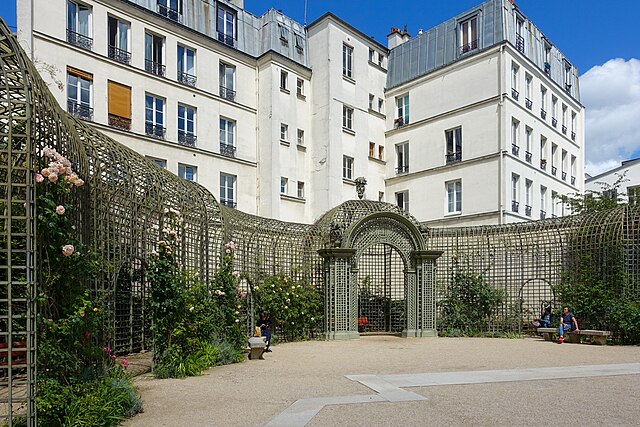
Jardin Anne Frank

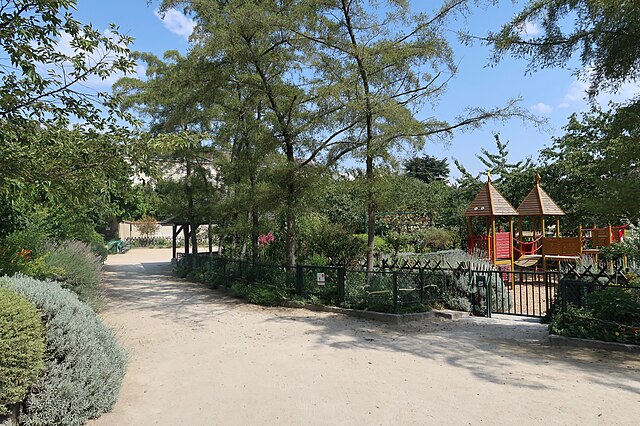
This small garden feels like a secret oasis in the busy Marais district. Its enclosed playground is ideal for toddlers and younger kids needing a calm, secure spot to play.


Jardin Villemin

Overlooking the lively Canal Saint-Martin, this park buzzes with local Parisian life. A fenced playground provides a safe play zone, while sports areas and the nearby canal invite active families to explore beyond the park.


Jardin Nelson Mandela

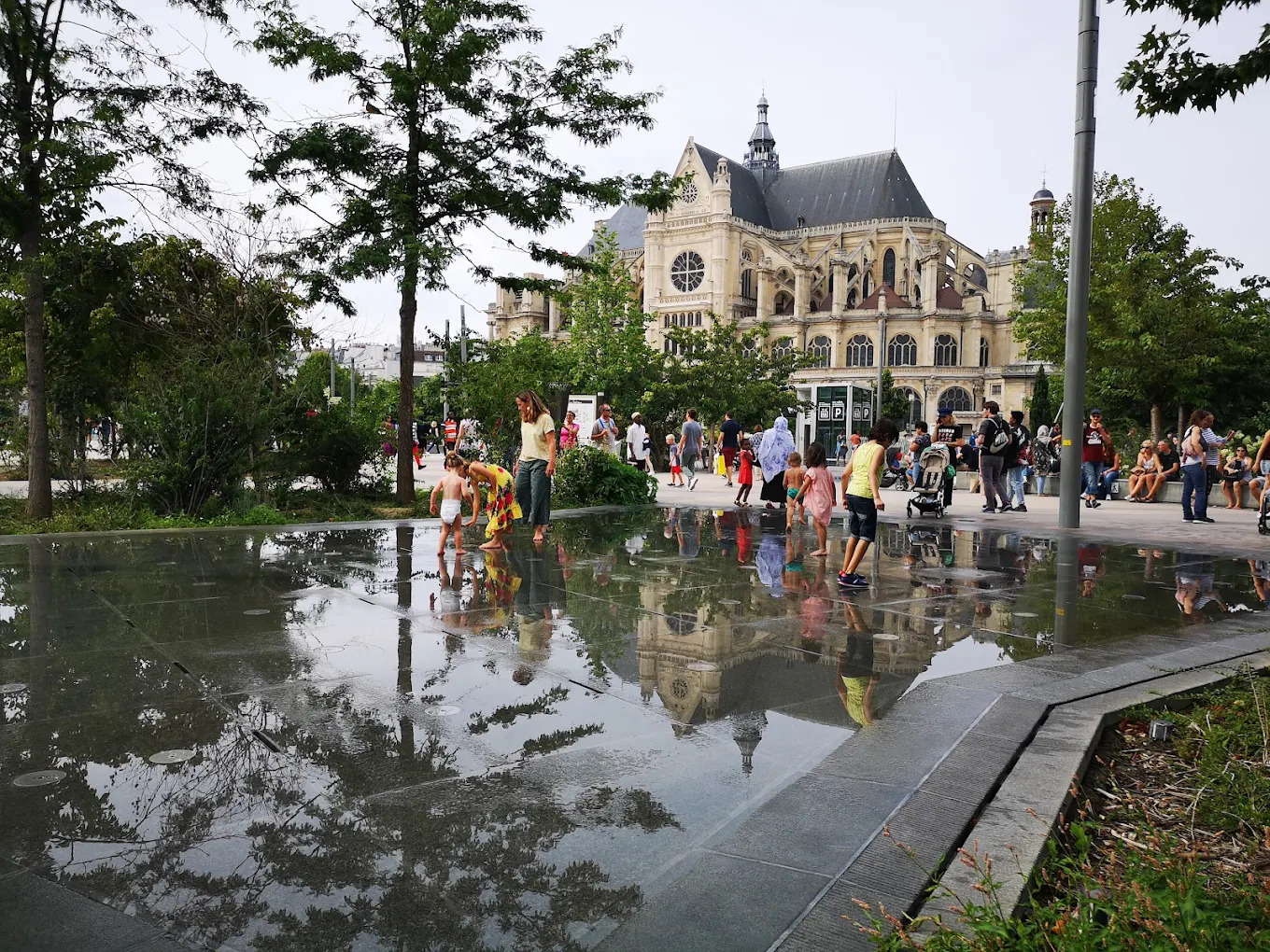
Modern, urban, and bright, the playgrounds within Jardin Nelson Mandela, right near Les Halles, pulse with city energy. Safe, rubberized flooring and contemporary climbing frames and slides are ideal for children under 11.


Square Barye

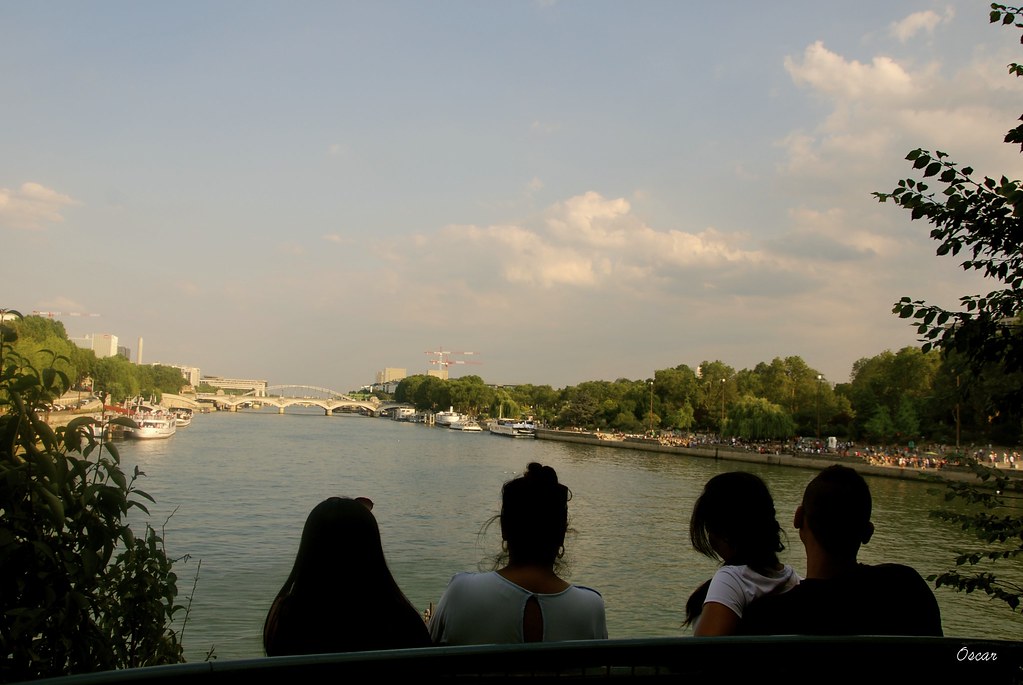
Intimate with beautiful river views, this park is a green pause on the picturesque Île Saint-Louis. The small playground suits little ones perfectly, and the peaceful setting lets parents enjoy a relaxed break while kids play.


Jardin Catherine Labouré

This peaceful garden in the 7th arrondissement feels like a secret. Shady benches, grassy lawns, and even a small vineyard make it a lovely spot for kids to roam and play.


Paris is packed with beautiful parks where your kids can run, play, and explore to their heart’s content. Grab a picnic, don’t forget the sunscreen, and head outside! You’ll be surprised how a simple day in the park can turn into unforgettable family memories. 

Discover The World Through AI with An Exhibition at the Jeu de Paume in Paris

12 August 2025 by Tarek Diouri--Adequin
Culture, Events, General
art, exhibition, paris, technology

To better understand the future of artificial intelligence, you must have a grasp on its history. The World Through AI exhibition, taking place at the Jeu de Paume until September 21, provides you with this retrospective through art.

The World Through AI gives 30 artists a space for creation related to those intelligent systems, present in our everyday lives. They express their thoughts on artificial intelligence, covering diverse themes – ethical, cultural, politico-social, ecological and so on – and using a wide array of media such as sculptures, paintings, audio and video recordings… some of which were also created with the assistance of AI.

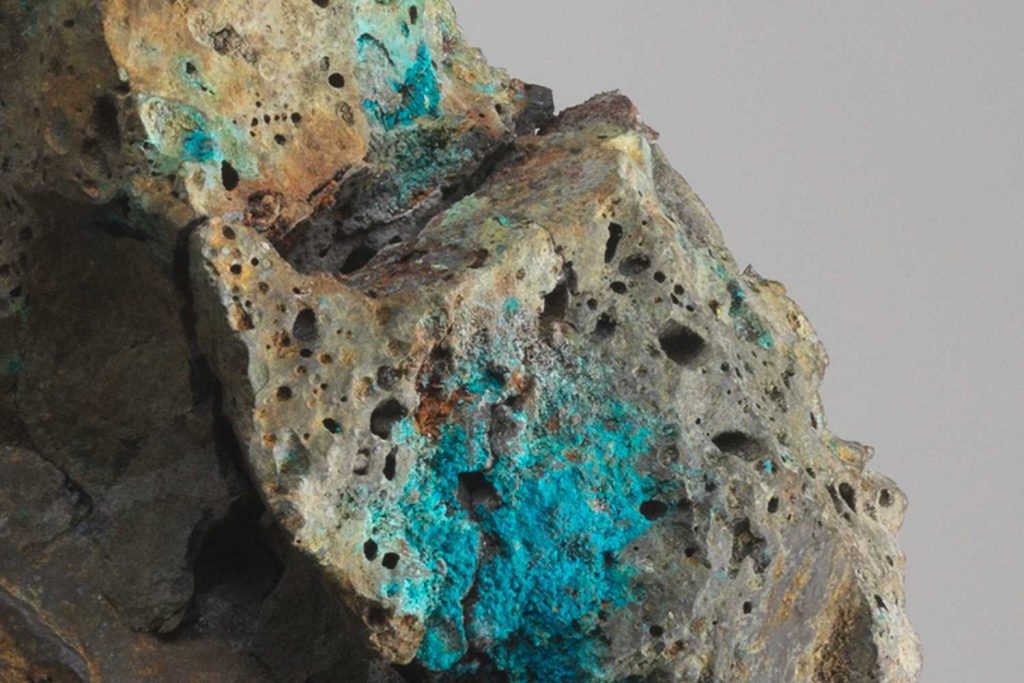
The show opens with tangible art in a physical space, showing us the material cost of the seemingly intangible AI systems; the very first pieces you will see as you enter the exhibition are sculptures that appear to be rocks. Metamorphism LI, Julian Charrière’s sculptures, are more than that: they are made of artificial lava and melted electronic waste you find in the devices running AI systems.

Close-up of a sample of “Metamorphism LI”, Julian Charrière’s sculptures present all throughout the first section of the exhibition

“We wanted to stress the fact that AI is not at all dematerialized technology”, Ada Ackerman, co-curator of the exhibition, said of the “mineralogical cabinet” used to open the exhibition. “We wanted to make the visitors aware that these technologies are very energy-consuming. Not everyone is aware that a simple request from ChatGPT requires [multiple] glasses of water.”

The exhibition balances on a tightrope of art and commentary, sometimes mocking AI for taking items at face-value (Trevor Paglen, The Treachery of Object Recognition), exposing viewers to the silent horrors of the “ghost workers” of the Global South (Meta Office, Behind the Screens of Amazon Mechanical Turks), or inviting visitors to become part of the art themselves.

One of Ada Ackerman’s favorite works in the exhibition, Hito Steyerl’s Mechanical Kurds installation, is one of the latter. “For me, this is also a metaphor of how, with AI today, all words become taggable objects”, she explains. “The people sitting in the benches [of the installation] also become objects to tag. I think it’s a good metaphor of how AI is changing our relationship and our perception of the world.”

The curator believes the latest developments of AI are “a major anthropological and cultural shift” for today’s society. She believes the exhibition is to be treated as an opening point for conversation and an attempt at better understanding artificial intelligence.


🎧 Listen to our entire interview with Ada Ackerman in the full episode of the High-Tech Intermission available on the World Radio Paris website. It is also available on Spotify, Apple Podcasts and other DSPs.

📌 Check out the “The World Through AI” as well. The exhibition will remain available at the Jeu de Paume until September 21, 2025.

Why Does France Shut Down in August?

5 August 2025 by Polly Watton
Culture, General, Podcast Episodes
france, french riviera, normandy, paris

Every summer, a quiet transformation sweeps across France. Cities empty, shops close, and signs reading “Fermé pour congés annuels” appear across windows. But where does everyone go? And why has this annual exodus become so deeply embedded in French culture?

In this episode of WRP Presents, host Héloïse Daniel explores the historical and sociological roots of France’s August shutdown — and takes us on a tour of the landscapes that define the French summer.


A Nation Built on Paid Vacation

France was the first country in the world to legalize paid time off and it shows. Since 1936, when the Popular Front government introduced mandatory vacation days, summer holidays have become more than just time away. They’re a national tradition. Today, French workers enjoy five weeks of paid vacation, and August remains the month when everything from factories to boulangeries closes.


Where Do the French Go on Holiday?

From seaside towns to mountain escapes, where you vacation in France often says something about who you are. Here’s a look at the most popular French holiday destinations:

The French Riviera (or Côte d’Azur)

Luxury, glamour, and sea views define towns like Saint-Tropez, Antibes, Menton or Cannes. But this stretch of Mediterranean coast is also crowded and unapologetically expensive, often attracting celebrities, yacht owners, and wealthy tourists.

The Atlantic Coast 

More relaxed and weather-dependent, regions like Brittany, the Landes, Vendée and the Basque Country are ideal for families. With dramatic coastlines and pristine nature, these areas offer cooler temperatures and space to breathe.

Dordogne, Ardèche & Provence

For affordable inland charm, many head to river-rich regions like Dordogne (known for castles and prehistoric caves), Ardèche (perfect for kayaking), or Provence, with its lavender fields and hilltop villages.

Moutain Retreats: The French Alps, Pyrénées and Jura

Mountains aren’t just for winter. In August, Chamonix, Annecy, and Cauterets offer hiking, lake swimming, and quietude. Many French families escape the heat and crowds by heading to higher altitudes.


What If You Stay in the City?

About one-third of French people don’t go on holiday, often due to financial limits or family obligations. But cities like Paris adapt: with Paris Plages, free events like outdoor cinemas, and quiet streets, some residents choose to stay put and enjoy the calm. 

August in Paris becomes something of a secret season: quiet streets, empty terraces, the freedom to wander. It’s a kind of inverted holiday, one that belongs only to those who remain.

🎧 Listen to the full episode of World Radio Paris Presents: Why France Shuts Down in August
Available now on Spotify and Apple Podcasts.

The Best Summer Reads to Brush Up on Your French Culture

12 July 2025 by Polly Watton
General, Literature
books, france, French books, paris, reading, summer

As the heat rises and city streets begin to empty for les vacances, there’s no better time to escape into the pages of a great book, especially one that brings the textures and tensions of France to life.

This summer, the editors and show hosts of World Radio Paris have put together a list of French books, old and new, fiction and fact to help our listeners become better versed in French literary offerings. All available in English translation, these works are perfect for readers eager to explore the richness of French thought, storytelling, and identity.

🎧 Want more recommendations?
Listen to our full episode on World Radio Paris, where we dive deeper into these titles and share why they made the cut. Available on Spotify and Apple Podcasts, or on our website. 

The Classics

The Count of Monte Cristo

Alexandre Dumas

If you’re going to start anywhere, start with Dumas. The Count of Monte Cristo is the ultimate summer epic — a saga of betrayal, revenge, and transformation. First published in 1844, it tells the story of Edmond Dantès, a man unjustly imprisoned who emerges to exact a masterful revenge. It’s a page-turner with the heart of a moral fable, still thrilling nearly two centuries on!

Find here

My Father’s Glory

Marcel Pagnol

In this charming memoir of childhood summers in Provence, filmmaker and novelist Marcel Pagnol captures a world of sunlit hills, gentle family rivalries, and the innocent wonder of youth. My Father’s Glory is nostalgia done right — tender, evocative, and tinged with the bittersweet clarity of adulthood looking back.

Get here

Bonjour Tristesse

Françoise Sagan

A novel of startling emotional precision, Bonjour Tristesse was written when Françoise Sagan was just 18. Set on the Riviera, this slim book follows a teenage girl whose lazy summer is disrupted by the arrival of her father’s new lover. Sagan’s prose is cool and cutting; her insights into desire, freedom, and disillusionment feel as fresh now as in 1954.

Get here

Promise at Dawn

Romain Gary

Part memoir, part novelistic fantasia, Promise at Dawn recounts Romain Gary’s extraordinary life, from a boyhood in Lithuania to his career as a diplomat and war hero. At its heart is the figure of his eccentric and loving mother, who believed in his greatness long before the world did. It’s a love story between a mother and son, and a deeply human portrait of ambition and sacrifice.

Get here

The Outsider

Albert Camus

“Mother died today. Or maybe yesterday, I don’t know.” With this famously detached opening, Camus launches one of the most iconic works of 20th-century literature. The Outsider is an unsettling novel about a man who refuses to play by society’s emotional rules. Existentialism made accessible.

Get here

Remembrance of Things Past

Marcel Proust

For the truly ambitious reader, Proust’s 4,000-page masterwork awaits. More than a novel, In Search of Lost Time is a meditation on memory, desire, and the passage of time. It’s famously dense but ultimately one of literature’s most rewarding journeys. 

Find here

Contemporary Fiction

Small Country

Gaël Faye

Set in Burundi on the eve of civil war, this lyrical debut by rapper-turned-author Gaël Faye explores childhood, exile, and the loss of innocence. Narrated by a young boy caught between cultures, Small Country is a compact novel with a poetic emotional reach.

Find here

What the Day Owes the Night

Yasmina Khadra

In this sweeping historical novel, Khadra — the pen name of former Algerian army officer Mohammed Moulessehoul — examines colonial Algeria through the life of Younes, a boy raised by a French family while his country moves toward independence. A story of cultural fracture, doomed love, and conflicted identity.

Get here

The Yellow Eyes of Crocodiles

Katherine Pancol

With wit and warmth, Pancol’s bestseller follows two very different sisters navigating modern life in Paris — one insecure and struggling, the other effortlessly glamorous. A delicious slice of contemporary French society.

Find here

My Husband

Maud Ventura

A hit in France and newly available in English, My Husband is a darkly comic tale of obsession disguised as devotion. Behind the seemingly perfect marriage lies a narrator whose neuroses and routines spiral into something far more disturbing. A sharp psychological novel that tears down the myth of marital bliss.

Get here

Non-Fiction

Moveable Feasts: Paris in Twenty Meals

Chris Newens

Chris takes us on a delicious journey through every arrondissement of Paris, uncovering the multicultural dishes and personal food stories that define modern Parisian cuisine. Perfect if you want to learn more about French food culture beyond the clichés!

Listen to our interview with the author here
Get the book here

The Other Paris

Lucy Sante

Forget the Eiffel Tower. Lucy Sante uncovers the shadowy, rebellious underside of the City of Light. From thieves and revolutionaries to poets and prostitutes, The Other Paris is a social history that highlights the city’s underclass. 

Find here

Sex and Lies

Leïla Slimani

In Sex and Lies, Leïla Slimani interviews Moroccan women about sexuality, repression, and freedom. It’s nonfiction, but it reads like a collection of secret confessions. Slimani is one of the most important voices in French literature today. This is a must-read if you’re interested in the intersection of gender, politics, and culture in the Francophone world.

Get here

A Brief History of France

Cecil Jenkins

For readers seeking context, Jenkins offers a concise and engaging guide through centuries of French history. From the Gauls to the Republic, this book is accessible without being simplistic and is the perfect crash course in understanding the country’s political and cultural DNA.

Find here

How to Be Authentic: Simone de Beauvoir and the Quest for Fulfillment

Skye Cleary

Simone de Beauvoir — philosopher, writer, feminist icon — gets a fresh interpretation in this thoughtful book by Skye Cleary. Drawing on The Second Sex and her complex relationship with Sartre, Cleary explores what it means to live an “authentic” life. This is a compelling introduction to one of France’s most famous intellectuals.

Get here

best-summer-reads-wrp
open-air-cinema-montmartre

Cinema Under the Stars: Where to Watch Outdoor Films in France This Summer

8 July 2025 by Polly Watton
Culture, Events, General
cinema, france, nightlife, paris, summer

There’s something timeless about watching a film outdoors. The warmth of the evening, the hum of the crowd, the glow of the screen under a darkening sky, it’s cinematic in its own right! And in France, where cinema isn’t just entertainment but a cultural institution, cinéma en plein air (open-air cinema) has become one of the country’s most beloved summer traditions.

While Americans may associate summer movie nights with drive-ins, France took a different path. The first outdoor screenings here date back to the early 20th century, often tied to village festivals or local fairs. After World War II, the idea took hold more widely, particularly in the 1950s and ’60s, with public parks, squares, and cultural venues becoming regular summer cinemas. Today, open-air screenings are more popular than ever, offering Hollywood blockbusters and French classics alike!

From rooftops in Paris to seaside towns along the Riviera, open-air screenings pop up across the country, bringing together communities, tourists, and film lovers alike. Here’s our curated list of some of the most exciting open-air cinema events happening across the country this summer — from Paris to Normandy to the Côte d’Azur.


In and Around Paris

La Seine Musicale – Boulogne-Billancourt | July 15–18

Music and movies come together at this riverside venue. The evenings kick off with live DJ sets, followed by films like The Grand Budapest Hotel, The Blues Brothers and Saturday Night Fever.
Find out more

La Villette Outdoor Cinema | July 23 – August 17

A true summer tradition in Paris. Every evening offers a double bill: a family-friendly film early on, and a crowd favorite after dark. This year’s lineup includes La La Land, Grease, Barbie, and The Wizard of Oz. Bring a blanket and come early!
Check out the full program 

Bar à Bulles Rooftop at the Moulin Rouge | Fridays, June–September

Tucked behind the famous cabaret, this rooftop bar hosts indie film screenings in an intimate setting.
All information here

Rooftop Cinema at Hôtel Paradiso | June–September

France’s first cinema-hotel brings a curated film program to its rooftop all summer long. With a drink in hand and the Paris skyline in view, it’s one of the more stylish ways to watch a movie.
Book your ticket here

Gare aux Docs | July 4 – August 30

This free festival takes place on the old tracks of the Petite Ceinture railway, an unusual setting for a lineup of documentaries on environmental issues.
Find out more

La Monnaie de Paris | July 23–26

Set in the courtyard of the historic Paris Mint, this four-night event features large-scale films like Amadeus,  The Count of Monte-Cristo and Inception.
Full lineup here

Vedettes de Paris – Port de Suffren | August 23–27

Screenings take place just below the Eiffel Tower at 10:30 PM on the pier of the boat company Vedettes de Paris. A magic and unforgettable location.
More information here

Ciné-voisins | July 17–27

A grassroots, community event in the 12th and 20th arrondissements, with films like Azur & Asmar, Respect, and Jalsaghar.
Find out more


On the French Riviera

Villefranche-sur-Mer | June 28 – September 12

Screenings start at 9:30 PM every evening, with ticketing from 8:45. The setting is right on the waterfront, it simply couldn’t be more picturesque! Riviera summer at its finest.
More information here

Beaulieu-sur-Mer | July 7 – August 26

Another daily screening series with a mix of new releases and family-friendly films, all set against the backdrop of the Mediterranean Sea.
Find out more

Nice | Through August 23

This city-wide program features open-air screenings across various neighborhoods. Films on the lineup include Finding Nemo, The Big Blue, Top Gun: Maverick, and Astérix: Mission Cléopâtre. Ideal for families and tourists.
Full program here


In Normandy

Ciné & Patrimoine – Calvados | Through September

Pairing cinema with cultural heritage, this series hosts film nights in historic locations like the Villa Montebello in Trouville-sur-Mer and the Manoir du Désert in Honfleur. A beautifully curated way to experience both film and local history.
Find out more 

Mon Quartier d’Été – Caen | August 20 – September 13

Local parks across Caen turn into open-air cinemas, showing family favorites like My Neighbor Totoro, The Princess and the Frog, and Wonka. A family-friendly way to end the summer.
More info here


🎧 Looking for more on France’s cinema culture? In Episode 18 of Lost in Frenchlation, we dive into Paris’s legendary movie theaters and what makes French filmgoing so special.

Don’t Miss Out On These French Music Festivals in July!

3 July 2025 by Tarek Diouri--Adequin
Culture, Events, General, Practical Tips
france, french riviera, music, music festival, nightlife, normandy, paris, summer

The summer has officially kicked off in France, and while there is plenty to do to cool down, the warmer weather is also a great time to get sweaty and dance!

Across the country, there are plenty of music festivals to go check out throughout the summer. Whether you prefer to enjoy hip-hop moshpits, or the energy of electro crowds, or if you’re more of a “in the spur of the moment” person and would prefer to have a variety of genres on hand, no worries, there is a music festival for you in France!

Below you will find a list, by region:

In Paris

Yardland Festival (July 4-6)

Yardland is the event contemporary hip-hop and R&B enthusiasts cannot miss. Taking place at the Hippodrome de Paris-Vincennes, the 3rd edition of the festival will welcome French artists Gazo, Tiakola, Guy2Bezbar and Theodora, as well as overseas artists like PARTYNEXTDOOR, Shenseea or Len.

For more info: https://yardland.paris/

Peacock Society Festival (July 11-12)

A week after Yardland, the Hippodrome de Paris-Vincennes will host the Peacock Society festival (July 11-12). This event is oriented towards fans of EDM, whether they like house music or variants of techno. The duo Underworld, known for their contribution to the Trainspotting soundtrack, will be performing in France for the first time since 2011!

For more info: https://peacocksociety.fr/?lang=en

Lollapalooza, PARIS Edition (July 18-20) 

For its seventh edition, the festival is bringing rising artists like Lola Young and RAYE, pop stars such as Benson Boone and Olivia Rodrigo, as well as legendary DJ David Guetta to its attendees, at the Hippodrome de Paris-Longchamp.

For more info: https://www.lollaparis.com/en

On The French Riviera

The Charlie Jazz Festival (July 3-6)

20 minutes from Marseille, the city of Vitrolles will welcome 3 days of Jazz offerings. Legendary organist Rhoda Scott, piano jazz Maestro Chucho Valdés and bass prodigy Richard Bona will be performing at the festival, alongside their respective Lady Quartet, Royal Quartet and Quintet.

For more info: https://www.charlie-jazz.com/

Bom Festival (July 4-5)

In the town of Plan-d’Aups-Sainte-Baume, 50 minutes away from Marseille, will be held a traditional music festival with gigs of funk, cumbia, fanfare, folk and even choirs! The Bom Festival puts forward a real variety of musical genres. This is a family friendly festival so don’t be afraid to bring kids! There will be spaces dedicated to the younger attendees. 

For more info: https://lebomfestival.org/

Nuits du Sud (July 10-12; 17-19)

This festival is 30 minutes from Nice, in Vence. Musical performances of a variety of genres, from reggae to afro pop, Cuban music, hip-hop and dancehall will take place in the Place du Grand Jardin for two weekends in a row.

For more info: https://vence-tourisme.com/nuits-du-sud-28eme-edition/

Hyeres’ Midi Festival (July 18-20)

Celebrating its 20th anniversary with a lineup mostly composed of US-and-UK-based acts, this festival is about 20 min from Toulon. Folk singer Christopher Owens, Manchester rock band Wu Lyf and Midi Fest alumni, French pop singer Malik Djoudi will be headlining the three days of the festival.

For more info: https://www.midi-festival.com/

Up in Normandy

Kave Fest (July 4-6)

The Kave Fest will be hosted at the Gisors Castle, an hour’s ride away from Rouen. It is a festival for all rock fans, no matter which subgenre you prefer. Punk rock enthusiasts will be looking forward to Bob Vylan’s July 6 performance while metalheads will make sure to attend Coheed and Cambria’s gig on July 4.

For more info: https://www.kavefest.com/

Les Pluies de Juillet (July 17-20)

Les Pluies des Juillet is the festival of the city of Le Tanu, an hour away from Caen. It’s as much of a music festival as it is a social and ecological initiative. While the main acts like French rapper Medine, EDM duo Kompromat and hyperpop rising star ELOI perform in the evenings, festivalgoers can participate in daytime workshops, where they can practice baking or meditate.

For more info: https://www.lespluiesdejuillet.org/

Festival Art Sonic (July 18-19)

If you’re just looking to have a good time listening to hits of all genres, Briouze’s Festival Art Sonic is the place to be. Pop star Clara Luciani, metal band Mass Hysteria and French rap top dog Gazo will all be showing up to this festival, an hour away from Caen.

For more info: https://www.festival-artsonic.com/

Grandes Marées (July 19-27)

As its name indicates, Grandes Marées – literally “Tall Tides” – is a festival that takes place by the seaside, 20 minutes from Granville.

The first day of the festival, July 19, takes place in Genêts, a small town an hour away from Caen, and will be completely free. Brazilian drumming club Cigale Do Brazil, blues duo Alcie Bela & Jack Ellis and local rock band La Base will perform that day.

The main part of the festival, from July 21 to July 27, will take place in the town of Jullouvile, 20 minutes from Genêts. Headliners such as French Touch icon Martin Solveig and electronic music giant Kavinsky will be performing.

For more info: https://en.tourisme-granville-terre-mer.com/immerse/during-highlights/grandes-marees-festival/

Going the extra kilometer

Les Vieilles Charrues (July 17-20)

Les Vieilles Charrues, one of the most important music festivals of July, is held in Brittany. Simply put, it is France’s biggest music festival.

Iconic artists from all genres have performed on the venues of the festival in Carhaix, an hour from Brest and Quimper. For its latest edition, the festival will welcome the Queen of Alt-Rock Angst Alanis Morissette, electronic music virtuoso Gesaffelstein, the legendary Sex Pistols and more.

For more info: https://www.brittanytourism.com/matching-what-i-want/culture-and-heritage/brittanys-main-events/vieilles-charrues/

Agnès Varda’s Paris at Musée Carnavalet: A Cinematic Tribute to a Legendary Filmmaker

30 June 2025 by Polly Watton
General
art, cinema, exhibition, museum, paris

Paris has been captured by many artists, but there’s a certain kind of Paris that only Agnès Varda saw. Not the postcard-perfect one of glossy guidebooks, but a city alive with small details, chance encounters, and overlooked lives. That Paris is now on display at the Musée Carnavalet in Le Paris d’Agnès Varda, de-ci, de-là, a new exhibition offering visitors an intimate look at Paris through the lens of one of France’s most iconic and inventive filmmakers. Le Paris d’Agnès Varda, de-ci, de-là invites audiences to explore the director’s deep connection to the French capital, blending film, photography, and art in a way that reflects Varda’s unique creative vision.

Agnès Varda (1928–2019) was a trailblazer in French cinema, often considered the only female director associated with the French New Wave—though she carved out a space entirely her own. Known for films like Cléo from 5 to 7, Vagabond, and One Sings, the Other Doesn’t, Varda blended documentary and fiction, art and activism, personal stories and political commentary. Her work was always deeply human, often centering on women’s experiences, marginalized voices, and the quiet poetry of daily life. But Varda was more than a filmmaker—she was also a photographer, installation artist, and tireless observer of the world around her.

Curated by photography historian Anne de Mondenard, Le Paris d’Agnès Varda offers a layered portrait of the filmmaker through archival film clips, photographs, personal objects, and whimsical installations. The exhibition allows visitors to wander—just as Varda did—through her favorite Parisian neighborhoods: Rue Daguerre, Montparnasse, the Left Bank, and beyond. 

For deeper insight into how the exhibition came together, listen to the latest episode of the WRP Presents podcast, where curator Anne de Mondenard discusses Varda’s legacy and her enduring influence on art and film.

Fête de la Musique 2025: What You Need to Know

16 June 2025 by Polly Watton
General
france, nightlife, paris

On June 21st, France transforms into one giant stage. From Paris to small village squares, music fills the air for Fête de la Musique, the country’s beloved annual ‘Music Day’. Whether you’re a first-timer or a seasoned fan, here’s everything you need to know to make the most of this free celebration — from must-see performances to transport tips and local insight.

If you’ve been in France for any length of time, you’ve probably heard about – or experienced – the magical chaos that is the Fête de la Musique. This annual nationwide ‘Music Day’ takes over the entire country every June 21st, turning streets, city squares, parks, and even train stations into impromptu concert venues.

Born in 1982 under then-Minister of Culture Jack Lang, this celebration has one simple rule: music everywhere, for everyone. It’s completely free, non-commercial, and open to all – welcoming both professional and amateur performers alike. Now in its 43rd year, Europe’s largest free music festival continues its democratic mission of bringing music to the masses.

This year’s edition is already generating buzz, with a noticeable uptick in international visitors, thanks in part to a viral social media trend sparked in the UK. British influencers have dubbed the festival a “must-see cultural experience,” turning the event into a hot summer destination. 

While this surge in popularity is exciting, it has also sparked a debate among locals who worry that the festival’s grassroots spirit might be at risk of being diluted by increasing crowds and creeping commercialization. Despite these concerns, the core rules remain unchanged: all performances must be free and all genres are welcome!


What To Expect


The vibe starts family-friendly in the afternoon but morphs into something more energetic as the night progresses (read: expect some rowdy crowds after midnight). Most open-air concerts wrap up around midnight but the party often continues in clubs and streets.

Comfortable shoes are essential—you’ll likely walk more than expected. Prepare for large crowds in hotspots like Châtelet, Le Marais, and along the Seine. 

Remember that the true spirit of the Fête de la Musique lies in its spontaneity.

While it’s good to have a few events in mind, leave room for serendipity. Some of the best moments happen when you follow the music down an unfamiliar street – stumbling upon incredible performances in unexpected places. But if you’d like some structure to your evening, here are some notable events happening this year:

    • Tuileries Gardens (1st arrondissement)
      A huge concert broadcast live on television featuring the long-awaited comeback of the Paris 2024 Olympic Cauldron
      👉 Event Info

    • Place Dauphine (1st arrondissement)
      Open-mic stage in one of Paris’s most picturesque squares
      👉 Event Info

    • Institut Suédois (3rd arrondissement)
      Join the flowery Scandanivian summer celebration Midsommar in a family-friendly atmosphere
      👉 Event Info

    • Centre Culturel Irlandais (5th arrondissement)
      Celebrating Irish music with a DJ set, traditional band, and indie rock group
      👉 Event Info

    • Place Saint-Michel (6th arrondissement)
      High-energy rock and metal concert
      👉 Event Info

    • Impasse Saint-Sébastien (11th arrondissement)
      Yearly hip-hop block party
      👉 Event Info

    • Place d’Aligre (12th arrondissement)
      Soul and funk tribute concert with the band Oncle Jam
      👉 Event Info

    • Palais de la Porte Dorée (12th arrondissement)
      A lineup of rap, drill, and urban pop in a gorgeous Art Deco museum
      👉 Event Info

    • Parvis de la Mairie (15th arrondissement)
      Electro beats at the EF Electro Festival
      👉 Event Info

    • PlayGround Porte des Lilas (19th arrondissement)
      Lace up your skates for the Roller Skate Block Party
      👉 Event Info


Your Essential Info

🎵 Full event listings and interactive map:
Official Fête de la Musique Website

🚇 All-night transport (June 21–22)
Major metro lines (1, 2, 4, 6, 9, 14), RER (A, B, C, D, E), and Transilien trains (H, J, L, N, P, R) will run through the night, but only stop at main stations.
👉 More transport info

http://worldradioparis.org/wp-content/uploads/2025/06/h4.mp3

« Next
Previous »

SIGN UP FOR OUR NEWSLETTER TODAY!

2025 © World Radio Paris –  All Rights Reserved.

{{playListTitle}}
  • {{ index + 1 }}
    {{ track.track_title }} {{ track.track_artist }} {{ track.album_title }} {{ track.length }}
{{list.tracks[currentTrack].track_title}}{{list.tracks[currentTrack].track_artist && typeof sonaar_music.option.show_artist_name != 'undefined' ? ' ' + sonaar_music.option.artist_separator + ' ' + list.tracks[currentTrack].track_artist:''}}
{{list.tracks[currentTrack].album_title}}
{{ list.tracks[currentTrack].album_title }}
{{list.tracks[currentTrack].track_title}}
{{list.tracks[currentTrack].track_artist }}
{{classes.speedRate}}X
{{list.tracks[currentTrack].track_title}}
{{list.tracks[currentTrack].track_artist }}
{{ cta['store-name'] }}