
LISTEN
  • THE RADIO
    • Our Shows
    • Journal
    • Schedule
    • About Us
    • FAQs
  • THE HUB
    • Local Events
    • Getting Started in France
    • Community Organisations
  • GET INVOLVED
    • Donate / Sponsor
    • Advertise with Us
    • Volunteer
LISTEN LIVE
  • THE RADIO
    • Our Shows
    • Journal
    • Schedule
    • About Us
    • FAQs
  • THE HUB
    • Local Events
    • Getting Started in France
    • Community Organisations
  • GET INVOLVED
    • Donate / Sponsor
    • Advertise with Us
    • Volunteer
LISTEN LIVE

culture

Why Is the French Government Considering A Ban of Social Media for Minors?

5 February 2026 by Tarek Diouri--Adequin
General
culture, france, paris, social media, technology

Back in December 2025, French president Emmanuel Macron had announced his intention to pass a bill which would restrict the use of social media among young people, an idea that was one of the main points of his party’s program ahead of the June 2024 legislative elections. This year, a bill to do just that was approved by the Assemblée Nationale on January 26 and is expected to be put into effect in September.

The bill stipulates that “access to an online social networking service provided by an online platform is prohibited for minors under the age of 15“, excluding educational resources such as encyclopedias. For the prohibition to work, an age verification system will have to be added to the prohibited websites – the system is currently undergoing a test phase through the France Identité platform.

Obviously, the feasibility of the ban and the effects it would entail are still to be seen, but one might wonder : what are the reasons pushing the French government to ban social media for minors? The world has been using social networking platforms for well over 20 years, so what pushed us to act now?

Would putting a cap on usage make a difference

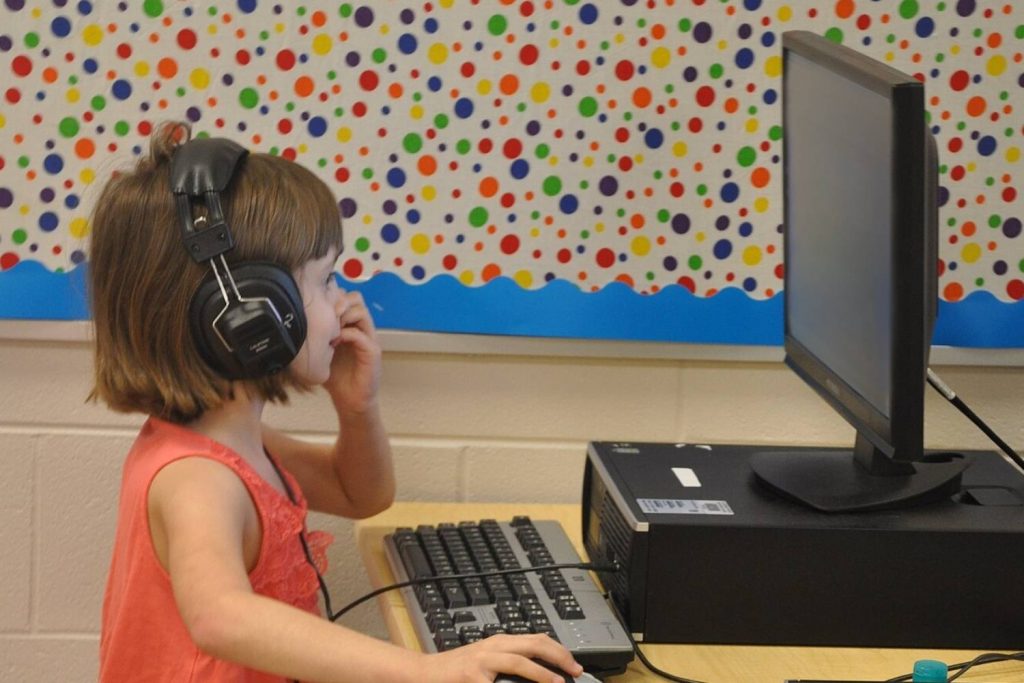
With everyone having access to a phone and Internet in today’s society, a lot of children already use platforms like TikTok or Snapchat on a regular basis.

A study shared by the Arcom, the French Regulatory Authority for Audiovisual and Digital Communication, estimated that 44% of minors joined social media before being 13 years old. Early last year, the European Statistical Office had also estimated that in France, more than 90% of 16-to-24-year-olds rely on online messaging systems to communicate as well. Social media is, like it or not, inherently part of today’s society.

This overwhelming use comes with its own set of problems. A few weeks ago, a report established by Parliament member Arthur Delaporte and former French people living outside France MP Stéphane Vojetta analyzed some of the negative influence social media can have on its users, both adults and minors.

The report notably pointed out issues related to the so-called influencers and called out invasive practices pushing users to spend large amounts of money for entertainment’s sake, as well as the perverse effect of push notifications on smartphones, some of which are suggestive enough to make people use applications for excessive durations.

Preventing more digital harm

Segments of the report are also dedicated to concrete cases of abuse and crimes tied to social media, including procuring on platforms like OnlyFans, or the live-streamed death of Kick streamer “Jean Pormanove” – real-name Raphaël Graven – for which two other streamers who would abuse him will be tried by a correctional tribunal in July.

While the report focuses on manageable issues, it is worth keeping the future uses of social media in mind as well. Recently, the Center for Countering Digital Hate estimated that the AI tool Grok, available on social media platform X (formerly known as Twitter) had generated more than 3 million photorealistic sexualized images since the implementation of its image generation system in August 2025.

According to data from the CCDH, approximately 23,000 of those images depicted children. The French offices of X were raided on February 3 as part of a probe into sexual deepfakes – as well as alleged political interference, another topic of discussion altogether, but one that also attests to the influence of social media.

The end of last year also saw the rise of the video artificial intelligence app Sora AI, which could essentially push deep fake practices further, or worsen the distribution of disinformation throughout online channels.

In that sense a social media ban could work to limit widespread use of those platforms, which can be useful and informative at times, but do cause harm now, harm that should not be able to reach minors.

But how can it truly be done? And what would be its real effects? To try and answer those questions, Tarek Diouri–Adequin interviewed Jennifer Branch-Allen, president of the Australian Parents Council, to gauge the new normal of Australia, which implemented its own version of the social media ban at the end of 2025.

Want to hear the interview? Check out the latest episode of the High-Tech Intermission on its dedicated page or listen to it on platforms like Spotify or Apple Podcasts.

American rapper MAVI hosts free show in Paris

27 January 2026 by Parker Songco
General
concerts, culture, mavi, paris

In honor of Paris Fashion Week and the release of his new mixtape, The Pilot, North Carolina rapper MAVI gave his Parisian fans a free show at FGO-Barbara on Jan. 23.

MAVI released The Pilot on Nov. 25, 2025, while on tour with rapper-producer duo Freddie Gibbs and The Alchemist. This performance in Paris marked his first time playing songs from his new mixtape in front of a live audience.

Before his performance, he joined host Parker Songco for an episode of World Radio Paris Presents to discuss everything from his inspiration for creating The Pilot to his anticipation of playing these songs live in front of his fans for the first time.

“I always feel like performing is the last step of producing a song. You get to see how a song really exists in a space, and then in the mind of the listener. So I’m excited to see how people perceive it,” MAVI told WRP.

The people perceived it perfectly. MAVI had FGO-Barbara jumping and waving their hands the whole night, creating the type of environment he said he wanted going into it:

“Especially for my European fans — I’m not out here so often — I wanted a more intimate, relaxed environment. My international tour dates are often closely packed and stressful. I be really tired. So for me to be relaxed and having fun, willing to give more time, and able to give more energy — that’s the goal.”

And that’s exactly what it felt like: relaxed and personal. It didn’t feel like MAVI was just running through songs for the sake of it. He was genuinely enjoying the fact that he got to hear these records breathe in a room for the first time.

One of the best moments of the night came during his performance of “Landgrab,” when he brought a fan on stage to rap Earl Sweatshirt’s verse. FGO-Barbara went crazy.

He even performed a brand new song from his upcoming full-length album, First In Flight, making the night feel like more than a mixtape celebration, but a preview of what’s next.

Listen to the entire World Radio Paris Presents episode on our website, or via Apple Podcasts and Spotify.

Are We Headed Towards a Takeover of AI in French Education ?

2 October 2025 by Tarek Diouri--Adequin
General
culture, education, technology

As we reached September, France had the Rentrée, its big “Back to School” moment last month. School is normally an important step for millions of students, developing their own mental capacities and personal knowledge throughout their youth.

They resolve problems, analyze data, learn the history of humanity, discover ways to put their own thoughts into form… but over the past few years, some students have given up on doing those tasks by themselves: they let AI take care of everything.

Artificial intelligence has already taken over many aspects of our daily lives; education couldn’t escape it either. With 74% of people aged 18 to 24 using those systems, according to a poll conducted by Ipsos, and 82% of students having used generative AI at least once – 68% of them using it at least once or twice every week – according to a questionnaire from the French Ministry of Higher Education, there’s a clear turnaround in the way young people throughout the country go through their educational journey.

Working faster, not smarter

While artificial intelligence could be much-needed help for students who struggle with comprehension or the difficulty of an exercise, it’s also a way for students looking to cut corners to solicit those intelligent systems and get them to do their homework quickly.

Data provided by OpenRouter showed ChatGPT usage averaged about 80 billion requests in May and hit its peak on May 27, when users generated over 90 billion requests.

The number of requests plummeted during the summer and has picked up since September, reaching a peak of just over 86 billion requests on September 30.

Those days are not random: they match the rhythm of students, who tend to have their final tests by May and go back to school in September.

Though OpenRouter analyzes worldwide data, you simply have to look at the Baccalaureat, the French high school final exam, and its cheating data for the past years to get a local insight. In 2024, 5% of cheaters had used “artificial intelligence” to do their work, according to the Ministry of Higher Education.

Teaching AI

With the number of AI uses trending upwards, putting a full stop to the technology seems like a lost cause. In that case, it might be worth looking at it from another angle.

“There are good things about AI. If you go back to 3 years ago, when you had a course you didn’t understand, you had to do so much research,” Evann Hislers, student at SciencesPo and author of the “L’IA pour les Étudiants (AI for Students)” guide, explains. “Now I can just ask ChatGPT and learn something very easily in two or three minutes. […] There are people who use AI the right way. They don’t see it as a production tool but as a helpful companion.”

Evann’s perspective is shared by Deborah Elalouf, president of the Tralalere company which oversees Internet Sans Crainte (Internet Without Fear), the national digital education program for the youth and their families.

Thanks to feedback from the various operations created by the program, including the Safer Internet Day initiative during which Internet Sans Crainte gets to take on the technologies of the future with students, teachers and parents, she has realized the youth also acknowledges that lack of information surrounding the use of AI.

“It’s important to learn how to use [those tools] and how to question them, in the way that uses our brains and does not create cognitive holes,” Deborah explains. “[Young people] really ask for support and help. It’s not just telling them “[AI]’s dangerous” or “It’s fantastic”. They asked us for tips on how to use it in a smart way, and how to dompt our AIs.”Elisabeth Borne, the French Minister of Education, has acknowledged this need to educate students on the ways to use AI and the way it reshapes the learning experience. An overhaul of the education system, geared towards artificial intelligence, might be needed in the coming years.


🎧 Listen to the latest episode of the High-Tech Intermission available on the World Radio Paris website. Also available on Spotify, Apple Podcasts and other podcast platforms.

SIGN UP FOR OUR NEWSLETTER TODAY!

2025 © World Radio Paris –  All Rights Reserved.

{{playListTitle}}
  • {{ index + 1 }}
    {{ track.track_title }} {{ track.track_artist }} {{ track.album_title }} {{ track.length }}
{{list.tracks[currentTrack].track_title}}{{list.tracks[currentTrack].track_artist && typeof sonaar_music.option.show_artist_name != 'undefined' ? ' ' + sonaar_music.option.artist_separator + ' ' + list.tracks[currentTrack].track_artist:''}}
{{list.tracks[currentTrack].album_title}}
{{ list.tracks[currentTrack].album_title }}
{{list.tracks[currentTrack].track_title}}
{{list.tracks[currentTrack].track_artist }}
{{classes.speedRate}}X
{{list.tracks[currentTrack].track_title}}
{{list.tracks[currentTrack].track_artist }}
{{ cta['store-name'] }}